
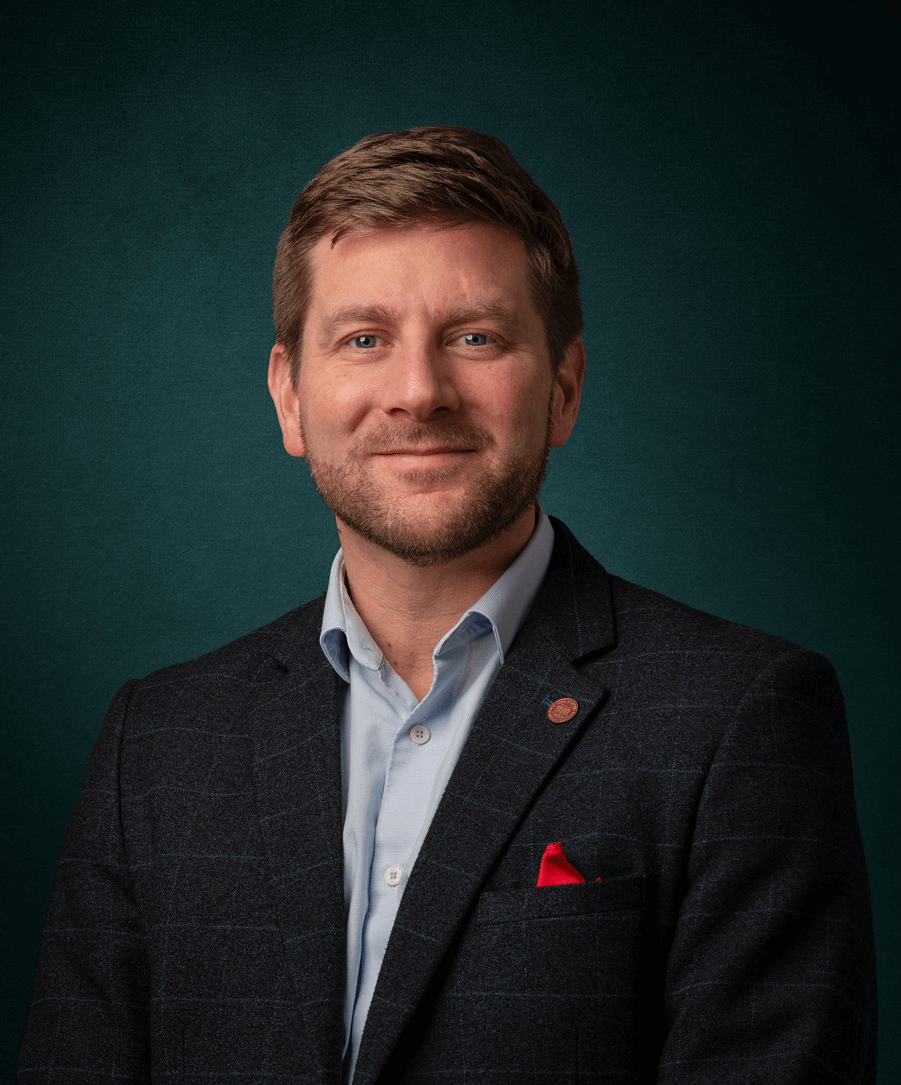
Written by Ewan Anderson
01 Jun 2026
S3E9 - Authenticity at Work: Building Teams That Speak Up
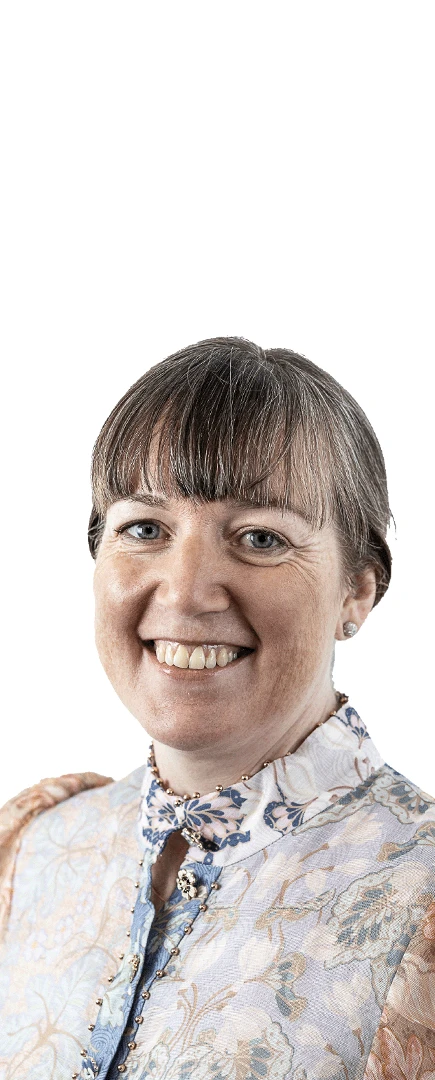
Podcast with Gill Ogilvie, Managing Director at Will Rudd
What does it really mean to be your authentic self at work?
In this episode of Recruitment and Beyond, we explore why authenticity at work can feel so difficult, particularly in the early stages of your career, and why it is critical for building high-performing, inclusive organisations.Gill Ogilvie, Managing Director at Will Rudd, shares her personal journey through a traditionally male-dominated industry and reflects on the pressure many professionals feel to fit in rather than stand out. From adapting her behaviour early in her career to developing a leadership style grounded in authenticity, Gill offers honest and practical insights into how workplace culture shapes the way people show up at work.
We discuss the relationship between confidence and authenticity, the impact of societal expectations, and how businesses can create environments where individuals feel able to express themselves fully. Drawing on the work of Brene Brown, the conversation explores themes such as vulnerability, trust, boundaries and what it means to lead with integrity.
Whether you are just starting your career or leading a team, this episode provides valuable insight into creating a positive workplace culture, improving employee engagement and building the confidence to make career decisions that align with your values.
Key Topics Covered
- Authenticity at work and why it matters
- Building confidence in early career stages
- Workplace culture in male-dominated industries
- Leadership and vulnerability
- Trust, boundaries and communication
- Creating inclusive, high-performing teams
- The influence of Brene Brown’s work on leadership
About the Guest
Gill Ogilvie is Managing Director at Will Rudd, a civil and structural engineering consultancy. With over 20 years of experience in the construction industry, Gill has built a reputation for leading with authenticity and championing cultural change within engineering and professional services environments.About Recruitment and Beyond
Recruitment and Beyond is a podcast exploring the evolving world of work, leadership and organisational culture. Each episode features conversations with industry leaders, offering practical insight into recruitment, people strategy and building high-performing teams.Want to Learn More?
If you are interested in improving your workplace culture, attracting top talent or building a more inclusive organisation, get in touch with our team.Full Transcript
Below is the full transcript of this episode for reference.S3E4 – Authenticity at Work: Why Being Yourself is a Leadership Strength
Transcript
Ewan (00:07):
Hi, welcome back to the Recruitment and Beyond Podcast. Today we are joined by Gill Ogilvy, who is the Managing Director of the Edinburgh office of Will Rudd. Gill, great to have you with us. Thanks for joining us.
Gill (00:20):
That's great. Thanks for inviting me.
Ewan (00:22):
So today we really wanted to delve into the topic of authenticity and how important it is, but also how challenging it can sometimes be for people to bring their true self and personality to work. I think there is real value in making sure people feel able to do that because that's where innovation is driven from. That's where we can really deliver value to our businesses.
Gill, you've got a few stories to tell in terms of the challenges, but also the opportunities, that authenticity can create. Do you want to tell us a little bit about your role today and your career journey?
Gill (00:59):
I am Managing Director of Will Rudd in the Edinburgh office. We are a civil and structural engineering firm, which means we design buildings, infrastructure, roads, bridges—anything really that helps maintain our civilisation.
I run the Edinburgh office and we also have sister offices in Glasgow and Dublin.
I started at Will Rudd 21 years ago as a junior engineer, and I've worked my way up over the last twenty years or so. I took over as Managing Director and co-owner in 2020, which was peak pandemic and probably the most interesting time possible to take over a business. For the last six years, I've been recovering from that experience.
Ewan (01:50):
Brilliant. I mean, that's certainly a challenging time to take on any leadership position.
We've been talking about being your authentic self. For someone in the early stages of their career, what does being authentic at work actually mean in practical terms?
Gill (02:14):
My experience is that it was difficult at the beginning.
When I was a young engineer, my first job was on a construction site. I definitely did not want to be my authentic self. What I wanted to do was blend in with everybody else and be one of the guys.
That affected everything: the way I spoke, the language I used, the way I dressed, the way I cut my hair, everything. I wanted to fit in and be accepted.
It's very challenging to step outside of that. At that stage of my career, I was doing well just to be taken seriously and get through the day.
Over my 25 or 30 years in construction, I've slowly come into my own and embraced the fact that I bring something different. That difference is important and valuable.
Gill (03:40):
I'm really passionate about encouraging people to embrace their authentic selves because we are all different.
That diversity brings new ideas. It makes other people feel more comfortable being themselves too. We move away from a monoculture and toward a genuinely diverse culture.
As you said, that brings innovation. It also creates value because people feel more valued when they can show up as themselves and be accepted for who they are.
Ewan (04:20):
Why do you think women, particularly in the early stages of their careers and especially in industries such as construction, feel that pressure to fit in?
Gill (04:35):
I have a theory about that.
I think we still live in a patriarchal society.
Speaking from my own experience, I was brought up to be a good girl. I was brought up to be compliant. I was brought up not to make a fuss.
I'm still working hard to break free from some of those expectations.
I'm a real people-pleaser. I want people to like me. I want people to see me as a nice person. But that's not always compatible with setting boundaries or standing up for yourself.
If you're standing up for yourself and making a bit of a fuss, you're no longer being the compliant, good girl who's standing quietly in the background.
That was certainly the message I grew up with.
Gill (05:34):
I absolutely think your upbringing has a huge influence.
I had a wonderful childhood, supportive parents and a great education. I would have had to work hard not to succeed in some way.
Yet deep down there was still this belief that I had to please other people, make them happy and avoid making a fuss.
These days I'm much more interested in taking up the space I'm entitled to and saying, "Actually, that doesn't really suit me."
While preparing for this podcast, I reflected on what I was like as a young graduate engineer arriving on site.
That really was a baptism of fire.
Gill (06:36):
What on earth was I thinking?
I clearly had some sort of inner steel and determination to do it.
Looking back now, it was a crazy thing to do. The amount of banter, inappropriate comments and sexist remarks that I laughed off just to be accepted as one of the guys was extraordinary.
At the time, I wanted to make sure nobody saw me as some sort of feminist nightmare.
When I reflect on it now, I wonder what else I could have done. I was a young woman trying to fit in.
But I certainly wouldn't handle it the same way today.
Ewan (07:22):
No, absolutely. It's interesting because there's a lot in that to unpack.
I'm very much a people-pleaser as well, and I can relate to that need to please people, particularly early in your career.
Do you think that comes from a lack of experience? When you're new to an environment, you're still trying to understand your place within it. As your experience grows, do you become more comfortable with where you fit in the team?
It sounds simple when you say it like that, but certainly from my own perspective, in the early years of my career I felt I wanted to fit in, I wanted to please people, and I wanted people to like me.
Do you think experience plays a role in helping people become more comfortable being themselves?
Gill (08:30):
It's always nice to meet a fellow people-pleaser, isn't it?
It can be crippling at times.
I think you're absolutely right, Ewan. Early in my career I was brought up to be the person who would help out, the person who would make everyone else feel good, the person who would do whatever was asked of me regardless of what I actually wanted.
As you get older, and perhaps it's an age and stage thing, you begin to think, "Actually, I don't really want to do that."
The healthy response is being able to say:
"I'm sorry, I don't really want to do that, but here's another solution."
Or:
"That doesn't sit with my values, so I'm not going to go down that route."
What often happens instead is that people say:
"Absolutely, I'm on it. I'll do that."
And then they don't.
That doesn't help anybody.
Gill (09:24):
That makes me think about what happened when I joined Will Rudd.
The person who interviewed me was Stuart Davidson, who was the Managing Director at the time. He was one of my biggest supporters and saw something in me that I certainly didn't see in myself.
He said:
"If you're lucky enough to get this job, we'd like you to join Women in Property."
Internally I was thinking:
"Are you kidding me?"
I had spent my whole life trying not to be seen as a woman in property. Why on earth would I join an organisation that highlighted exactly that?
Of course, because I wanted the job, what I actually said was:
"I'd love to do that."
Six months later, in my first review, Stuart said:
"So, you haven't joined Women in Property. You said you would."
And I replied:
"I'm on it. I've just been busy settling into the new job."
A year later he asked again.
At that point I thought:
"For the love of God, I'm just going to have to join."
Gill (11:00):
I filled in the form, joined, and then realised it was one of the best things I've ever done.
A few years after Stuart passed away, I was speaking to someone after his funeral and she said:
"Do you know he phoned me about you?"
Apparently he had rung and said:
"I've got this girl here. I don't know what's wrong with her, but she's absolutely determined not to join Women in Property."
He was pushing me into it because he genuinely believed it would be good for me.
Looking back now, I wish I'd simply said:
"Look, Stuart, I'm really uncomfortable with this because I'm trying so hard not to be defined as a woman in property."
Then we could have had a proper grown-up conversation about it.
He could have said:
"This isn't about labels. It's about networking, building relationships, growing your career and developing your business."
That conversation never happened because I wasn't honest about how I was feeling.
Gill (11:44):
That's why I think it's important to vocalise what you're not comfortable with.
If you're honest enough to say:
"I'm not sure this feels right to me,"
then the other person has the opportunity to explain their reasoning.
You might still disagree.
Or you might completely change your mind.
But at least you're having the conversation.
Ewan (12:36):
That's really valuable.
It's interesting to hear you describe it in those terms because, at that point in your life, joining a Women in Property group felt like it ran completely counter to what you were trying to achieve.
On one hand it's sad that you felt that pressure.
On the other hand, you can completely understand why you felt that way and why that seemed like the right approach at the time.
Gill (13:05):
Absolutely.
And of course Women in Property ended up being one of the best decisions I ever made, so thank you, Stuart.
It expanded my network and introduced me to people who opened doors and created opportunities.
More importantly, it gave me choices.
By that point I had enough confidence and enough connections that I could begin thinking differently about difficult situations.
If something wasn't working, I knew there were people who could support me, advise me, mentor me or even help me find another role if I needed one.
I'm very conscious that not everyone starts from that position.
Not everyone has that inner confidence.
Not everyone has that support network.
Not everyone has that little rod of steel inside them that allows them to think:
"I'll be okay if this doesn't work out."
Gill (14:30):
I didn't consciously know I had that confidence.
I just knew that if everything went to hell in a handcart, I could turn up on my parents' doorstep and they would support me.
Not everybody has that.
When you don't have those safety nets, the choices available to you can feel far more limited.
And that's another thing Women in Property gave me, it helped create those choices.
Ewan (14:58):
I want to come back to that point later.
Before we do, was there a particular turning point for you, a sliding doors moment, where you suddenly realised you could start being your authentic self?
Was there an event, a person or a situation that gave you that confidence?
Gill (15:25):
I think joining Women in Property was still too early for that.
At the time I was really just attending events, having a drink and chatting with people.
The real turning point came when I met a business coach who still works with Will Rudd today.
She introduced me to Brené Brown.
Brené Brown has probably had a bigger influence on my professional development than anybody else.
A lot of her work around courage, vulnerability and authenticity really helped me understand who I was and how I wanted to show up as a leader.
One concept that resonated with me was the idea of standing on your own sacred ground.
You're not puffing yourself up and pretending you know everything.
But you're not shrinking yourself either.
You're simply standing confidently in who you are.
That idea was transformational for me.
Gill (15:25):
I think joining Women in Property was probably too early in my journey to be the real turning point.
At that stage, I was simply going along, having a drink, meeting people and building relationships. It wasn't particularly transformational in itself.
The real catalyst came when I met a business coach who still works with Will Rudd today. She introduced me to Brené Brown, and Brené Brown has been a huge influence on how I've developed as a leader and found my authentic self.
She talks about the concept of standing on your sacred ground.
It's the idea that you're neither puffing yourself up and pretending you know everything, nor making yourself small and apologising for taking up space.
You're simply standing comfortably in who you are.
You're grounded.
You're confident.
You understand your value without feeling the need to prove it. That concept really resonated with me.
Gill (16:38):
I've worked with that business coach, Carolyn Stenhouse, for probably ten or fifteen years now.
She was absolutely a light-bulb moment for me.
She helped me realise that I had something worthwhile to contribute, that my way of thinking had value, and that I didn't need to copy anybody else in order to be successful.
In many ways, she was my epiphany moment.
Ewan (17:12):
It's interesting because the strength of character required to put yourself in that position in the first place is often overlooked.
You talk about arriving on construction sites as a young engineer. That alone required an enormous amount of courage.
Yet so often we don't acknowledge our own strengths. We focus on what we haven't done rather than recognising what we've already achieved.
I wonder whether there are still structural or cultural barriers within traditionally male-dominated industries that make authenticity difficult for people today.
Gill (18:12):
I think it's really complex.
One thing I firmly believe is that patriarchal stereotypes don't just affect women—they affect men as well.
I think men are often expected to live up to societal stereotypes that are every bit as difficult and unrealistic as those imposed on women.
The stereotype of the alpha male who never shows weakness can be incredibly restrictive.
If that's not who you are, then you're hiding part of yourself every day.
It's no different to what I was doing when I was turning up in shapeless clothes, speaking differently and trying to present myself in a way that fitted the environment.
I was hiding who I was too.
Gill (19:46):
What I believe now is that the more authentic I am, the more permission other people feel they have to be authentic too.
Whether that's related to gender, background, personality type or any other characteristic, people see that it's okay to show up as themselves.
And that creates a ripple effect.
The more people do it, the more normal it becomes.
My experience of the construction industry in Scotland is that things have improved significantly, but there is still a predominantly white, heterosexual, male culture in many environments.
Anyone who feels able to show up authentically within that setting deserves a huge amount of credit because they're often helping create change for everyone else as well.
Ewan (20:48):
That's a really interesting point.
A lot of conversations about authenticity seem to come back to confidence.
Do you think organisations sometimes place too much emphasis on confidence and mistake that for authenticity?
Some people are naturally outgoing. They'll happily stand up and deliver a presentation in front of the whole company.
But for other people, that simply isn't who they are.
Their strength might be quietly delivering exceptional work every day rather than being the loudest voice in the room.
Gill (21:26):
That's a really good question.
If we go back to the idea of standing on your sacred ground, there is an element of confidence involved.
But confidence doesn't mean being extroverted.
It doesn't mean standing at the front of the room giving presentations.
It means having confidence in your own value, your own skills and your own contribution.
There are plenty of people who aren't natural extroverts but who still stand confidently on their own sacred ground.
They know who they are.
They know what they bring.
They know they work in an environment that values that contribution.
And that's enough.
Gill (22:44):
We were actually talking about this today at lunchtime at Will Rudd.
We were running a session on the anatomy of trust using Brené Brown's BRAVING model:
• Boundaries
• Reliability
• Accountability
• Vault
• Integrity
• Non-judgement
• Generosity
Those are the elements she identifies as the building blocks of trust.
We've got a room of forty people and some of them are fully engaged.
Others are sitting there and I can practically see their toes curling because they know we're about to talk about trust, vulnerability and feelings again.
And honestly, that's okay.
I don't need everybody to become deeply introspective.
I don't need everyone to enjoy these conversations.
If somebody says:
"I don't do feelings. I don't enjoy talking about personal development."
that's absolutely fine.
What isn't fine is raining on the parade of the people who do want to have those conversations.
It's about respecting differences.
It's about understanding your own value and respecting the fact that somebody else's way of engaging might be different from yours.
Ewan (24:13):
That's a really interesting perspective.
Ultimately, it comes back to creating an environment where people can set boundaries without worrying about how they'll be perceived.
Someone might say:
"I'm not the person who's going to stand up and present to the whole company."
But at the same time, they can still contribute ideas, add value and play a significant role in the organisation.
The challenge for leaders is creating a culture where people feel comfortable saying:
"That's not me."
without feeling judged for it.
Gill (24:48):
Exactly.
And that's where culture really comes into play.
As a managing director, that's what I'm constantly trying to build—an environment where people feel able to say what they need, set boundaries and hold each other accountable.
That applies whether you're speaking to a graduate engineer or another director.
Everyone should feel able to say:
"You said you would do this, and it hasn't happened."
without being worried about the consequences.
Creating that kind of culture is challenging, but it's incredibly important.
Gill (24:48):
Exactly.
If I'm speaking from the position of a Managing Director, my focus is always on building a culture where people feel able to set boundaries and hold one another accountable.
I want people to be comfortable saying:
"You said you were going to do A, but B has happened instead."
Even if that conversation is with someone senior.
That's the sort of culture we're trying to create at Will Rudd.
Gill (25:34):
If I'm talking to other Managing Directors, my first piece of advice is:
"Go and read Dare to Lead by Brené Brown."
Then share it with your leadership team.
That's what we've done.
We started with the directors, then brought in our associates, then our senior engineers and now the wider team.
We've tried to create a common language around trust and leadership so everyone understands the same concepts.
The BRAVING framework gives us that shared language.
If I'm speaking to a graduate rather than a Managing Director, my advice is slightly different.
I'd say:
"Read Dare to Lead and use it as a way to start conversations with your manager."
If something isn't working for you, explain why.
The chances of getting what you want are much greater if you're willing to have an honest conversation about it.
Gill (26:41):
Let's say you're a graduate who's been told you'll be doing finite element analysis on a concrete structure for six months and, frankly, it's as exciting as watching paint dry.
If you don't want to do that, you need to be brave enough to say:
"I don't want to spend six months doing this because of A, B and C. Is there an opportunity for me to get some exposure to D, E and F as well?"
Sometimes people worry about being labelled difficult.
They're concerned their manager will think:
"They're a pain in the arse. Let's get rid of them."
That's where choices matter.
If I have confidence and options, then I can say:
"This organisation isn't right for me. I'll go somewhere else."
But I recognise that's a privilege not everyone has.
Gill (28:00):
I always knew that if things went badly, I could rely on my family.
But I also built a network.
Through Women in Property and other relationships, I created connections that gave me options.
If everything went to hell in a handcart, I knew there were people I could call and ask:
"Do you know anyone looking for an engineer?"
That's why I keep coming back to networking.
Networking isn't just about finding opportunities.
It's about creating choices.
And having choices gives you confidence.
Ewan (28:56):
I think there are a couple of really important points there.
Firstly, you're interviewing the company just as much as they're interviewing you.
You should do everything you can to understand the culture of the organisation before you join it.
Of course, culture isn't always exactly what it's advertised to be, but you want to find an environment where those conversations are possible.
Secondly, culture has to come from the top.
Everybody in the organisation needs to understand the kind of environment you're trying to create.
For example, someone should feel comfortable saying:
"I'm happy to do this work, but six months is probably longer than I'd like to spend on it. Is there another opportunity we could build into the development plan?"
That seems entirely reasonable to me.
People understand they need to earn their stripes and develop experience.
But they should also be able to discuss where they want their careers to go.
Ewan (30:13):
The third point is about choice.
If organisations promise things and don't deliver them, people eventually leave.
Maybe not immediately.
But they start the process mentally.
They begin thinking:
"Maybe this isn't the place for me."
Gill (30:33):
And they've checked out.
Ewan (30:33):
Exactly. They've checked out.
Gill (30:34):
And once they've checked out mentally, you're no longer getting the best from them.
Gill (30:38):
Culture is one of those words that's used all the time.
At Will Rudd, we actually have a cultural change group because we're actively trying to improve our culture.
One of the most interesting things that came out of our staff engagement survey was that we struggle with difficult conversations.
We're all long-serving people.
I've been here over twenty years.
Several of my fellow directors have been here almost as long.
When you've worked together for that length of time, you know each other as friends.
The challenge is that you don't want to upset people.
It's difficult to say:
"That didn't work for me."
Or:
"You said you'd do A, B and C, and it didn't happen."
Gill (31:47):
The survey told us that we were very good at positive feedback.
We're great at saying:
"Fantastic job."
"Thanks, I really appreciate that."
"You were a huge help."
What we weren't good at was constructive challenge.
So we've spent a lot of time learning how to have those conversations effectively.
Gill (32:48):
One of the biggest influences on that was Marshall Rosenberg's work on Nonviolent Communication.
He's renowned internationally for helping people navigate some of the world's most difficult conflicts.
Obviously our management meetings at Will Rudd are slightly less dramatic than international peace negotiations, but the principles still apply.
The structure is very simple.
You say:
"When you said the report would be issued on Thursday and it went out on Friday, I felt frustrated because the deadline was important to me."
Then you explain what you need next time.
It's about discussing behaviour rather than attacking people.
Gill (33:56):
We don't use the framework perfectly every day.
But it gives us a common language.
And that's incredibly valuable.
It changes the conversation completely.
When I think about culture, that's what it really means.
If a company tells you:
"Integrity is one of our core values,"
then you should feel able to question behaviour that doesn't align with that.
You should be able to say:
"In my interview you talked a lot about integrity. What happened in that meeting didn't feel consistent with that. Can we talk about it?"
Too often organisations talk about culture in very broad terms.
The real question is:
What does culture actually look like in practice?
Ewan (34:52):
Absolutely.
I was having a conversation recently about culture and values, and one of the things we discussed was how values need to be measurable.
They need to be visible in the way people behave.
A vision and a set of values only matter if they're actually lived day to day rather than simply written on a wall.
Gill (35:33):
That's exactly right.
Ewan (35:34):
Authenticity and constructive conflict are closely linked.
If everybody agrees all the time, that's probably a problem.
The whole purpose of creating a diverse organisation is to bring together different perspectives. If those perspectives never challenge each other, you're missing the benefit of diversity.
Healthy debate helps people come together around better decisions. You might disagree initially, but if you can discuss things openly, you'll arrive at a stronger outcome.
I think that's incredibly valuable.
Gill (36:07):
And it's really hard.
It's hard for us as well.
Ewan (36:08):
Absolutely.
None of this is easy.
Another thing we've touched on throughout this conversation is resilience.
Authenticity requires a degree of resilience because you're putting yourself out there. You're expressing your views and occasionally taking risks.
How important is it to create an environment where people feel comfortable being resilient and standing up for themselves?
Gill (36:46):
For me, resilience is about being willing to try and being willing to fail.
It's about creating a culture where failure is acceptable.
We all try our best. We approach things with good intentions and we genuinely want to succeed. But sometimes things don't work out.
When they don't, we learn from it, dust ourselves off and move forward.
I think people need to see others fail.
They need to see that failure isn't the end of the world.
They need to see people make mistakes, recover and continue growing. That creates psychological safety because it reminds everyone that perfection isn't the expectation.
And let's be honest, there are days when something goes wrong and you go home convinced it's the end of your wee world.
You might have a glass of wine, feel sorry for yourself for a night and then come back the next morning.
The important thing is knowing you'll be supported.
Knowing you'll be allowed to learn from the experience rather than be defined by it.
Ewan (38:32):
I think that's such an important point.
Nobody wants to fail, but failure is part of learning.
The organisations that really thrive are often the ones where people feel safe enough to try something new.
If something doesn't work, they're supported in understanding why and improving next time rather than being criticised immediately.
That honesty is critical too.
People need feedback.
They need colleagues who'll say:
"It's okay, we've all made mistakes. What have we learned from this and what can we do differently next time?"
I think that all contributes to creating an environment where people can genuinely be themselves.
Most people spend the early part of their careers desperately trying not to stand out. They don't want to make mistakes. They don't want to be the person people are talking about at coffee break.
But that mindset can stifle innovation and creativity.
People stop taking risks.
They stop suggesting ideas.
They stop putting themselves forward.
Gill (39:45):
Exactly.
It's incredibly important.
Ewan (39:49):
This has been a fascinating discussion.
I could honestly talk about this all day because it's something I'm really passionate about.
If you had to leave our listeners with three practical pieces of advice for creating a workplace where people feel comfortable being their authentic selves, what would they be?
Gill (40:15):
The first thing I'd say is: find a support network.
That could be Women in Property, a Young Directors Forum, a professional body or any group of like-minded people.
Having people outside your immediate organisation who understand your challenges can be incredibly valuable.
Sometimes all you need is someone to say:
"No, I think you're right."
Or:
"That idea isn't crazy at all. You should go for it."
That external validation can give you the confidence to take action.
My second piece of advice is: go and find Brené Brown.
Read the books.
Watch the videos.
Work through the exercises.
I've found her work incredibly practical and incredibly helpful throughout my career.
One message that has always stayed with me is the Theodore Roosevelt concept of the person in the arena.
The person who matters is the one who turns up, takes the risks and gets knocked down.
Not the people sitting in the cheap seats offering commentary.
They're not the ones doing the work.
Be brave.
Be willing to enter the arena.
My third piece of advice is: make sure you create choices for yourself.
And one of the best ways to do that is to network early and network often.
I left it later than I should have.
I should have listened to Stuart Davidson and joined Women in Property sooner.
Your network gives you options.
It gives you support.
It creates opportunities.
Ultimately, it gives you the confidence that comes from knowing you have choices available to you.
Ewan (43:04):
Brilliant.
That has been a fantastic discussion.
Thank you very much for your time today, Gill.
It's been a really enjoyable conversation.
We'll also include details of the Brené Brown resources you mentioned in the show notes.
Gill (43:16):
That would be brilliant.
Ewan (43:18):
Thank you again for joining us and I look forward to catching up with you again soon.
Gill (43:22):
Thanks very much, Ewan. Perfect.