
 Written by
Ewan Anderson
28 Apr 2026
Written by
Ewan Anderson
28 Apr 2026
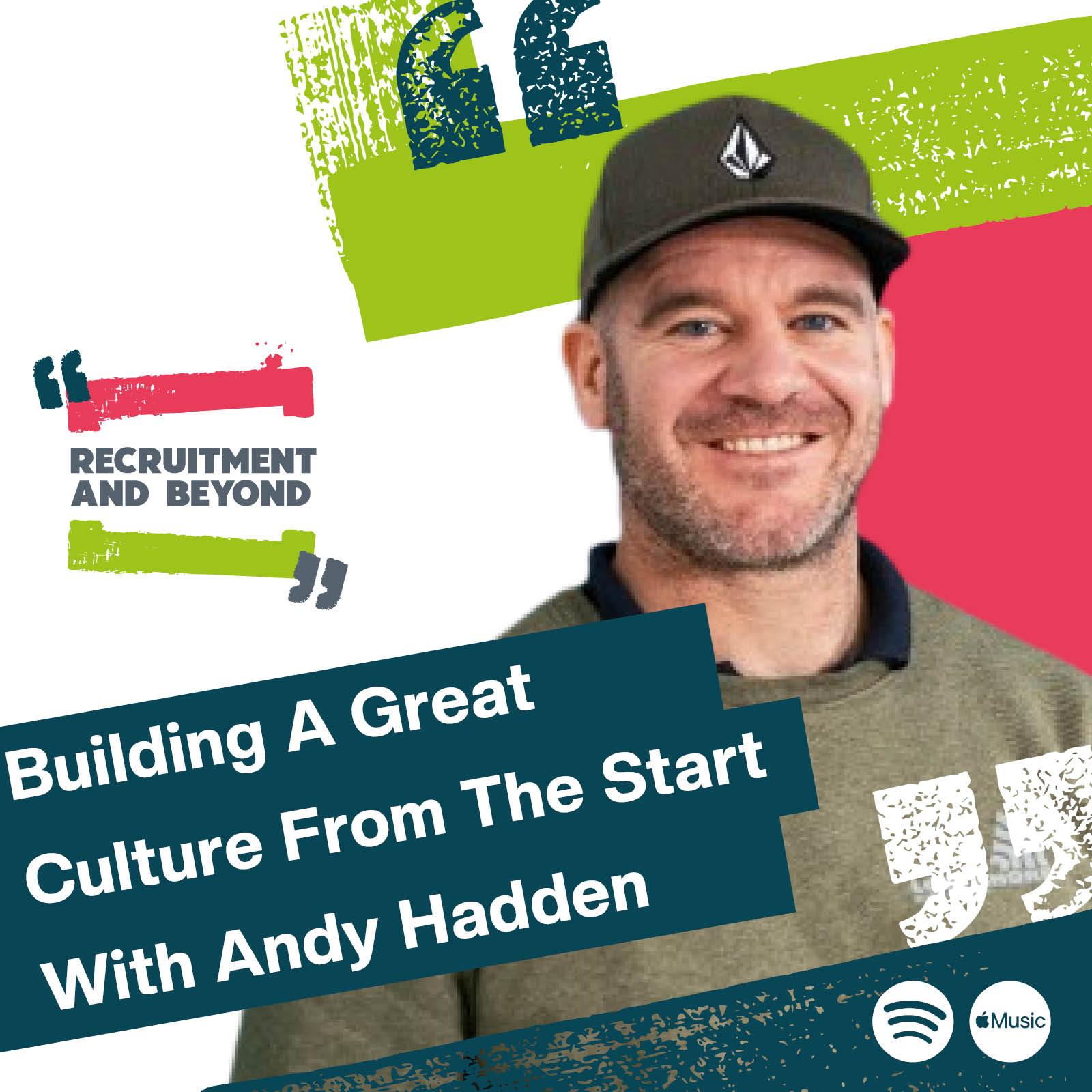
S3E8 - Building A Great Culture From The Start
Building Culture From the Ground Up
Building a strong company culture is often discussed but less often understood, particularly in fast growing organisations.In this episode of Recruitment and Beyond, we speak with Andy Hadden, Founder of Lost Shore Surf Resort, about what it really takes to build culture from the ground up. Starting with a blank slate, Andy and his team had the opportunity to define their values, behaviours and hiring approach from the outset.
The conversation offers an honest view of startup life, where hiring is centred on belief in the vision, adaptability and mindset rather than experience alone. It also reinforces that culture is not something that can be imposed or installed. It must be lived consistently across the organisation.
As the business expanded from a small founding team to more than 100 employees, new challenges emerged. Maintaining alignment, communication and shared purpose became increasingly complex.
This episode highlights the role leadership plays in protecting and reinforcing culture, as well as the importance of structure, governance and clear direction as organisations scale.
It is a valuable listen for founders, HR professionals and leaders navigating growth and cultural change.
Building A Great Culture From The Start - Transcript
Ewan (00:07):
Hi, welcome back to the Recruitment and Beyond podcast. We've got a really exciting episode today joined by Andy Hadden, who is the founder of Lost Shore. Lost Shore, I think I've watched the progress of Lost Shore over many years and it's exciting to see it's up and running and it's a fantastic addition to Edinburgh’s landscape. So Andy, great to have you with us.
Andy (00:28):
Yeah, good to be here.
Ewan (00:30):
Thanks for joining us. I'll tell you what, actually, could you give us a bit of an insight into Lost Shore, your journey to how it came to fruition and where you are now?
Andy (00:40):
Yeah, sure. Lost Shore, for those that haven't been down or possibly haven't heard of it, is a £60 million development on the edge of Edinburgh in the Central Belt. It's a surf resort, Lost Shore Surf Resort. We have a wave-making technology within a lagoon that's about three football pitches in size. It produces top quality waves, up to a thousand an hour, and the beauty is you can get 80 people in that lagoon at any one time.
Surfing is traditionally one of the hardest sports in the world to learn, but it's also incredibly popular where it's accessible. There are 45 million surfers out there and a strong community. The beauty of these waves is that at the touch of a button, you can create professional-level waves at the back and beginner-friendly rollers at the front.
Outside of surfing, it’s really like three business plans. We have the surfing element, 52 units of accommodation to support visitor demand, and a broader food, beverage, and leisure offering. It's a place to eat, drink, spend time with friends and family, with saunas, spa facilities, surf skate academies, and links to the nearby climbing arena. Altogether, it creates something bigger than the sum of its parts.
Ewan (03:20):
Brilliant. Before we get into the questions, tell us about where the idea came from and your background.
Andy (03:51):
When I grew up, my father was a school teacher and rugby coach, and my mother was a radiographer. I didn’t grow up with lots of money, but I had access to incredible sports facilities. That shaped my lifestyle and gave me opportunities. Later I realised not everyone has that access.
I wanted to create infrastructure that could give people similar opportunities. I trained as a chartered surveyor, was made redundant after the recession, and ended up working in insolvency. During that time, I surfed a lot and became fascinated by surf parks.
I eventually visited a wave technology site in Spain and realised this was real and would change the sport. From that moment I thought I could build a leisure business around it and brought the idea back to Scotland.
Ewan (08:23):
Did your purpose influence the kind of workforce you wanted?
Andy (08:56):
Yes. In a startup, people have to believe in the vision. They don’t have to believe in every detail, but they need a connection to it. Early on, we needed people who were adaptable, motivated, and willing to get involved in anything.
Ewan (12:17):
So is it useful to build culture from scratch?
Andy (12:45):
You can’t buy culture. It takes time to build and can be lost quickly. It has to be nurtured. At the start, you stay true to your values and bring people along with you.
Ewan (15:35):
How did you approach recruitment with such diverse roles?
Andy (15:35):
Early on, it was about finding good people with the right mindset. As we grew, we needed more specialists. Around 12 to 15 people, we were unstoppable. At 30, it became harder, and at 120 it’s even more complex to maintain culture.
Ewan (18:29):
How do you communicate culture at scale?
Andy (18:58):
It’s difficult. As departments grow, expertise becomes essential, and culture can drift. We were fortunate that our early team set a strong foundation, and newer employees started to learn from them.
Ewan (21:08):
Do you have practical ways to embed culture?
Andy (21:29):
HR was essential to set up systems and processes. Now we focus on simple things like giving managers budgets to take their teams out and build relationships.
Ewan (24:09):
How do you encourage collaboration across teams?
Andy (24:09):
We give people access to shared experiences like the surf lagoon, but also recognise not everyone connects with that, so we create flexibility for different interests.
Ewan (25:14):
How important is leadership?
Andy (25:14):
It’s the most important part. Without strong leadership structures, culture struggles. You need the right people at the top to create the environment for others to thrive.
Ewan (27:17):
How important is the board?
Andy (27:17):
Very important. The board shapes decisions that affect the entire business. A supportive, collaborative board can make a huge difference.
Ewan (29:08):
What was your initial vision for people joining?
Andy (29:08):
We had to show it was a real, viable business while also offering something exciting. The vision was to create a facility that benefits people, the community, and the economy.
Ewan (31:35):
What kept you motivated?
Andy (32:05):
I always believed it would work. That belief carried me through the difficult moments.
Ewan (35:17):
What advice would you give to someone starting something ambitious?
Andy (35:17):
Stay true to yourself and your vision. It’s a tough journey, and you’ll face challenges, but belief is what keeps you moving forward.
Ewan (37:05):
Andy, thank you so much for your time today.
Andy (37:22):
Thanks for having me. Check us out at lostshore.com and on social media.
Ewan (37:42):
Thanks for listening to the Recruitment and Beyond podcast. Don’t forget to subscribe and leave a review.