
 Written by
Ewan Anderson
20 Jan 2025
Written by
Ewan Anderson
20 Jan 2025
Preventing Employee Burnout

Preventing Employee Burnout
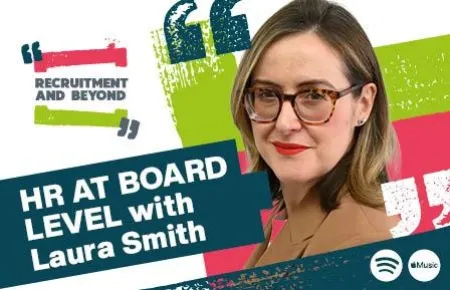
Lisa Thomson, now the Chief People Officer at Clear Sky Logic, and former owner of Purpose HR (now part of the AAB Group), gave us the benefit of her expertise and insight into preventing employee burnout.
It is a growing phenomenon that is a challenge for companies up and down the country, and while each case is different, there are some simple steps companies can take to help prevent it.
Download the podcast or check it out on our YouTube Channel.
Preventing Employee Burnout - Transcript
Ewan (00:05):
Hi. Welcome to the Recruitment and Beyond podcast. This is your essential guide to navigating the ever-changing world of human resources and recruitment. We chat to industry leading figures to give you the inside track on growing and developing the very best teams. Today we chatted with Lisa Thompson. Lisa recently joined Clear Sky Logic as their Chief people Officer. She previously founded Purpose HR and Niche HR consultancy focused on technology and the life sciences sectors, which she sold to the a b group. In 2021. We talked about preventing employee burnout and how important it's to support your team to flourish even in the toughest of times. Hi, welcome back to the Recruitment and Beyond podcast. Today we are joined by Lisa Thompson and we've got the topic of how to avoid burnout. Really looking forward to this actually. There's lots of discussion around this. Things have obviously changed quite a bit over the last few years, and employee burnout has such an important topic for HR teams and companies right across the country. So Lisa, welcome along.
Lisa (01:21):
Hi, nice to see
Ewan (01:23):
You. Great to have you here. So Lisa, do you want to tell us a little bit about where you are just now, what sort of role you're doing now, and then we can get into some of the discussion around employee burnout?
Lisa (01:33):
Absolutely. So I like to think of myself as a recovering HR entrepreneur. I sold my last business, which was an HR consulting business providing outsourced HR support to mainly tech and also life sciences and high growth startup businesses. I grew that business to a team of 22 people, and we had a turnover of a million, and I sold that coming up three years ago now, exited it two years ago. And now what I do is I sit on a few different boards, a non-exec director, and I'm also doing bits and pieces of fractional HR consulting. So working with quite selectively with really interest and exciting businesses where I can help them develop their people in HR strategies. So yes, it's a good place to be.
Ewan (02:23):
Good. And how is recovery in progress? Yes, quite good. That's good. And so what is it about the HR function, just out of interest or what sort of things that makes you passionate? What floats your boat now?
Lisa (02:40):
Yeah, I mean I think I've always been so excited about HR or people as an enabling function. I've always so much enjoyed work in my really exciting technical or scientific businesses, people doing really clever, amazing things I couldn't personally do myself. But obviously to do that at scale and to grow their teams, they need that support around the people function in the HR and good teamwork. And that's something that I've been able to help with. So being able to enable that and bring in maybe softer skills or complimentary skills to help founders in that space, I've always loved it and I just really get excited about people developing to their full potential and basically how much impact that can make to a business. And the difference between success and failure really. I think people are so key, as you know.
Ewan (03:30):
Yes, I know. Absolutely. And it's something we talk about a lot and actually we've discussed it ourselves is that culture side of things. And interestingly, the softer skills that are coming in becoming more important as technical. I suppose technical skills change, particularly in a tech business, the softer skills are so important now, aren't they?
Lisa (03:49):
Yeah. And even the word soft, they're not actually that softer, are they?
Ewan (03:53):
It's not a great term, is it?
Lisa (03:55):
Yeah, but they're so essential, aren't it? It's like emotional intelligence, eq, how do we interact with people? How do we get the best of each other? And developing people to their potential, especially if you're a business that's based on innovation or the knowledge of your people, the skills of your people is so essential.
Ewan (04:13):
Absolutely. And the innovation part of it only comes out when people feel comfortable where they are and what they're doing. No, absolutely. Absolutely. So obviously we're going to talk about employee burnout today, and it's something I know you're really passionate about and it's something that we've seen potentially on the rise over the last we will. And I know there's a lot of, not fixes, but things that are coming out there to try and help businesses and to try and help deal with that. But I suppose I wanted to just really understand it to define what that means and what it means to you, I guess. So what is employee burnout?
Lisa (04:46):
Yeah, I mean I think when we talk about burnout, as I understand it, it's not a medically recognized term. It's not a condition it can be dins with, but it's basically becoming much, much more recognized and understood. And it's very much a chronic condition where essentially somebody has become to the point of emotional, mental, and even physical breakdown where they're basically due to workplace stress, no longer able to function well. And generally that tends to be over a long period of time that will develop. But yeah, it is really much where they're overwhelmed, fatigued and no longer able to deliver at their potential. And it's a real problem for businesses, but also just for site as a whole in terms of our contribution and for people.
Ewan (05:37):
Yeah, I mean I was chatting to someone today and do you think it's a British thing? Do you think it's a global thing? Is it in that strive for productivity? Is it that we are pushing people too hard or they're too spread because we're trying to get as much out of people as we possibly can? Is it that or is it that people are taking on a lot, they want to keep their job? What do you think is driving that burnout?
Lisa (06:03):
Yeah, that's a really good question. I mean, I think it has been something that's been a lot more prevalent in terms of people talking about it anyway
(06:11):
Since Covid. And I guess what I would say is that since then there's been so much blurring of the boundaries in terms of home and work life and people almost taken on so much more. And also what we're seeing as well is obviously the progression of technology. There's always been emails on your phone or blackberries or going back. I remember the, yeah, I mean obviously it's moved on, but we are at this point where the lines are so blurred and so we're never really able to switch off, particularly globalization as well. So often people are working with different time zones, so the nine to five doesn't necessarily exist anymore. We're always on, we're always available technologies in our pocket. So it's very hard. And social media as well is actually becoming part of work. So a lot of people are working through different mediums, not just email anymore.
(07:11):
And so it becomes really prevalent that we actually just feel that we have to be always available and always on. I think that's a really, really big factor of it. And I think also people are a lot more open now, better mental, not have. So it might've been before that we just didn't really talk about it and we struggled, but we just sort of kept that to ourselves and didn't open up, which in itself is not a good thing. It's a really bad thing. But I do think now we're a bit more open and visible about that. So that's a good thing in itself, as long as we can then act on it and support it. But I do think that also even since covid, so I said I think it's been a bigger thing since now going back to the office. So we're now adding on commutes and it's challenges and juggles and childcare challenges and all these other things, and we've not necessarily reduced workloads. So that's another challenge. And then what we're seeing as well is that businesses, particularly with the current economic climate and things like that, a lot of businesses are trying to do less with more.
(08:15):
So the pressure on people is just growing as well. So I wouldn't really point to one factor to go to your question, is it local? Is it global? I think it's probably global. My view on it is probably fixed to the UK environment and what I see here, but I can imagine that I can't see that it's different in other areas either.
Ewan (08:37):
Did you see it as something that was growing when you were, obviously as part of your consultancy, did you have more and more HR teams coming to you and speaking to you about it?
Lisa (08:46):
So when we were growing, our consultancy in particular during Covid was a massive growth period for us. So my team were actually doing more because we're working with lots and lots of different clients in a way because we were all at home and we were able to juggle a lot more things because we weren't on one client, focusing on one client at a time. We were able to juggle a lot more, actually, we were probably more productive. But if you think of that in terms of stressors,
(09:13):
That was a lot because my team were all having multiple different clients contacting them at different times. And each of those clients individually, their own teams were struggling with a lot of challenges. And HR is often seen as the solution, they go to person. So HR teams themselves were getting really burnt out and it was a big challenge. So yeah, that was a big thing. We did a lot in Covid to try and put strategies in place, which we can talk about afterwards later question. But we were also trying to then help our clients as well as help ourselves. And there's this whole thing isn't there? What does it put on your oxygen mask first?
Ewan (09:54):
Yeah, that's
Lisa (09:56):
True. You can't really help people if you're not eating from the front in terms of looking after yourself. And I'm a big believer in that.
Ewan (10:04):
Yeah, no, absolutely. And I think that that is absolutely critical as you've got to make sure that the team, the leadership team, whoever is leading from the front and all lot of this, particularly around diversity inclusion is one of those areas where people need to lead from the front. But so is that
(10:22):
Looking after dealing with supporting your team, that's so important. It comes from a leadership point of view. I mean, you're going to help your team, but as a leader you need to make sure you're implementing a lot of these strategies. You're almost living that brand, aren't you? You're living that experience because you've got to make sure that people feel it's accepted to talk about it. I mean, I think you touched on it there actually more and more people are talking about it. So whether there's more of it or not, I think it's a case that more and more people are talking about it and businesses feel more open to talk about this sort of stuff. Now it's not seen as, if I talk about this, I'm going to be out of a job. I don't think there's that fear anymore. Is there?
Lisa (11:00):
I would hope not. Well,
Ewan (11:02):
There
Lisa (11:03):
Is that fear. That's a cultural issue
Ewan (11:06):
In
Lisa (11:07):
Itself. I think we've also seen, I don't want to go into specifics, but I do think in the press and in the news, we've seen some awful examples of what can happen when things spiral and people don't talk about it. And then we hear awful stories about people that we thought were fine and lit. Do think it's really difficult.
Ewan (11:28):
Do you think it's the mean, technology has obviously had an impact and obviously it's that continually on, but I know a lot of businesses are trying to deal with that now, but has technology also provided a lot of tools? And I know like you say, we'll go to talk about some strategies, but has it also provided some tools to help people manage their employee burnout or their burnout essentially?
Lisa (11:52):
I think tools can only work in that sense if they're led by leaders who role model the behavior. So what I don't like is say you're a business and you've that you've got employees that are struggling with burnout or workaholic or other things, and you're like, oh, user EEP system, we've got a wellness app. Don't worry. We've got a wellness app that is our second plaster. It's not going to fix anything. So I think we need to be real about these things. That's really important.
Ewan (12:31):
Yeah, I mean I think it's a real challenge, isn't it? I think we came from a world where there was that drive, that continual drive to be the last person in the office, make sure you're there last, make sure you're there first. You're that hustle culture that meant that whether you were a lawyer or an accountant or a business owner or whatever it was, there was a feeling of right, we need to be the last people, the last people to leave and the first people in to show that we can do it. Almost a presenteeism of a ridiculous level of presenteeism that probably burnt a lot of people out. And I don't feel that we have a lot of that these days, but I think there's still an element of people feeling like they need to perform to progress and grow in their job. Do you think that's the case?
Lisa (13:22):
Well, I don't think it's always about being in the office. I mean, there's this whole thing about replying to messages really late at night or being seen to be going to every event to network or do all these things. And then you're juggling that with all the other things that you have on at home and things like that. And I mean, obviously what I'd love to go and speak about, and I think we will, is strategies and ways to mitigate that. And again, just back to what I said, it does need to be led from the top because I think you said it before, it's like unless people feel that they have, it's almost like permission.
Ewan (13:58):
Absolutely, absolutely. I think it is that it's that feeling of comfort or feel uncomfortable enough to say to your line manager or whoever it might be, listen, I just feel a wee bit worn out and I need to just reassess what I'm doing here. And I think that sometimes if you don't have that support structure in place, it can be a lonely place. It can be a challenging place, can it?
Lisa (14:22):
Yeah, and absolutely. And to be fair, I mean, what we've not really spoke about is the impact of burnout is often that people become less productive, they become disengaged, and when it really spirals and you become completely overwhelmed, you don't feel effective. You almost spend more time doing less, getting lost in detail of things, and then you're not actually making a difference or an impact. So it's not good for the business. It's not just about individual wellbeing, it's actually about business productivity. It is a business issue, commercial issue
Ewan (15:01):
Ultimately. It absolutely is. It's the bottom line. And it's that productivity where people, as you touched on, I mean the symptoms are not the symptoms. Yeah, I mean the reality or the result of poor employee or employee burnout is exactly as you see, their productivity actually goes down. So while the drive is there to be more productive, to deliver more, to get more done has the absolute opposite
Lisa (15:25):
Effect. So there's a lot of things that can come up. So somebody that's been previously really motivated, really engaged, really excited about things can start to become maybe a bit negative, a bit cynical, can become a bit overwhelmed, maybe their energy is just less visible, maybe when they were really effective before that can start to slip off. Deadlines don't necessarily get met. And it's not necessarily because they're not there or present, it's just that they're struggling to manage everything. And their self-esteem, for example, can be,
(16:04):
That's a real thing. And then on a personal level, so if you're thinking of it as an individual, you can become maybe having insomnia and other issues or health can suffer. And if there has been maybe underlying conditions already or things like addiction, that can definitely worsen. So we can be more prone to that. So maybe we're relying more and more on props, like alcohol could be gambling, could be shopping, all these types of different things actually that can be more and more necessary just to help us continue. So that can be an issue as well.
Ewan (16:42):
So as an HR team, they're looking at strategies to try and deal with this to avoid it or to deal with the situation if it has already arisen, what sort of strategies would you suggest to try and put in place?
Lisa (16:55):
So I mean, we had some really good experience ourselves, and it's not something I came up with, but I was introduced to a framework called the Mindful Business Charter. Charter, sorry, business charter. So this was something that was actually developed in the legal sector, which is professional services sector, which obviously has, I mean, if we look at Magic circle firms and all of this, there's obviously still challenges. I'm not going to pretend that it's perfect, but as a sector, and my husband's a lawyer actually, and I've obviously built a professional services business, spent a lot of time in that space, the demands of clients, it makes things really difficult because businesses are not just focusing on what the leader says, they're actually looking at delivering for your clients.
(17:47):
What I loved about this framework, and when I spent some time looking into it, something that we signed up to and we actually registered as a member business of was, it was a whole commitment around practices within your business, but also other businesses. So it wasn't just law firms, there was businesses in banking, large client businesses. I think Barkley Bank was one where they were signing up to say, we commit to this as well. So if you work with us as a partner, as a client, as a service provider, as a supplier, we will all manage these processes together. And it was really sensible things about managing rest periods, respecting times that people need to switch off. I know that there's a lot of talk at the moment about legal frameworks for switch off time and things like that. I mean, I personally don't know that that should really be necessary. I do think that businesses should be able to sensibly drive that themselves without legislation. Sometimes I think politics almost gets involved in things that if we could just do things sensibly, we didn't really need that. And so things like as a manager, when I email people real practical, basic things, do I maybe just manage the time that it gets delivered?
Ewan (19:04):
Okay.
Lisa (19:05):
And before I do that, do I actually talk to myself and check, because this is a funny thing. So I've spoke to people before where they said, no, what I do is I send all my emails at night. What I do is I set 'em so that people don't get 'em until eight 30 in the morning. And then I spoke to the staff and they're like, oh, we so honestly can't stand it. I open my emails in the morning, I get seven emails at the same time. Dunno what one's more important. And so actually about communication, sensible communication. And if you can have that discussion as well with your client and then as a leader or a business owner, you can have that sensible discussion to make sure that you manage expectations. It's so valuable.
Ewan (19:49):
Communication is so often the critical part of this. And obviously working in the comms world, you kind of take it for granted sometimes, but actually internal communications is such an important skill as much as anything else. Just being able to communicate with your team. And we talk a wee bit here about being vulnerable and being able to,
(20:13):
These questions are, they're not silly. As you touched on there, a really good example of all the emails come in at eight 30, oh my goodness, I dunno what to do, which one do I go for? And as a manager, you're probably thinking, that's great. I'll not send them in the middle of the night. I'll send them in the first thing in the morning and then great, they can go on and manage it. But actually you create, you're helping, you're creating more stress and anxiety. So it's so good to be able to then communicate. And I guess communication is probably a critical part of any strategy, looking at employee burnout.
Lisa (20:46):
And I think it's mindful as well. And almost being sometimes as a manager or a leader or a business owner, what can you say no to or what can you push back? Sometimes I think the worst thing is if it's an employee, go to a manager or early and you say, I'm really struggling, I'm burnt out. And you say, don't worry. Any problems you have, just tell me. And it's like, no, I actually want you to offer some practical suggestions. So sometimes you need to sit down and say, okay, take me through your list of what you've got on your plate. Let's reprioritize it together. Sometimes it needs to be a little bit more proactive than reactive because sometimes people don't even know what to ask for. I think that's an unmet need sometimes.
Ewan (21:32):
Yeah, no, that's a critical thing actually. And actually being, as you say, proactive about it and sitting down with someone and looking at their workload because I think everybody's ambitious. No, that's not true. People are ambitious. There's lots of people who are ambitious. And it's not to say that you come and we deal with something effectively and say, look, I know you can't do everything, so let's prioritize. And you can still have your ambition, you can still have that drive to succeed, but actually let's do it in a practical format because you're right. If you keep going without asking those questions, then eventually you dunno which way is right, you dunno what's to be expected. Then it's very challenging to come back from that.
Lisa (22:10):
And sometimes there's this whole thing about if you need something done, give it to a bitsy person. And that can be a real issue in the team because what it ends up is overloading the highest performers in the team because they're almost seen as a sponge that will so everything up and you don't really know what's going on underneath the surface for that person, which is a real risk actually.
Ewan (22:33):
Do some of the strategies, some of the practical things like managing emails, whether it's communication after certain hours, that sort of thing. Some of these things, are they important? Is that what people are implementing their business, or is it more of a broader strategy that you're looking at when you're talking to HR teams?
Lisa (22:55):
I mean, what I'm going to talk about is what we did with the business actually, if that's great. And what we actually did was we did a session with a team, and so it was a very much collaborative and it was about our working practices,
(23:09):
And it was about what would people like, and there was lots of really helpful things that people said like I'm going to block out in my diary things like the times that I pick up the kids from school or the times that I'm not available. And then we were all really recognized of that in terms of, okay, I'm not going to put meetings in there. Equally from a business perspective, I was able to say, well, okay guys, this is the time that we do our team stand up every day, so this is a protected time that I do need you, and that was able to find a good time. So it has to be a two way thing. The other part of it was even basic stuff. Yes, you can look at a strategy, but I do think practical tips are really key.
Ewan (23:50):
Absolutely.
Lisa (23:50):
So even things like we would just look at putting on our emails because some people actually wanted to send emails at night, and that's okay. And I was like that. But what I would do is I would say on my email notification at the bottom, I work funny out, but I can't remember the exact word, sporadic hours or something. I don't expect you to respond to me at the time that I sent this, things like that. But unless somebody had actually had that explained to them, they were like, what does she really mean that? Yeah,
Ewan (24:23):
Absolutely.
Lisa (24:24):
I think it's got to be explained and in context.
Ewan (24:27):
Yeah, yeah. No, absolutely. And I think if you're new into business for instance, and you get that email from you, I've just started my first week and I get that. I don't expect anybody to respond, but you really do. Then you need, oh,
Lisa (24:40):
No, but she did it.
Ewan (24:44):
Yeah, absolutely. Absolutely. And I guess just, I wonder if it's changed, I know we touched on this at the start and you said, look, if Covid was a big change for a lot of businesses, and obviously we know that has been the case, but you touched on something there about the fact that I'm going to block it some time for going to pick up the kids, or this is my gym time, I need to go to the gym every day at lunchtime because it just helps my productivity in the afternoon, whoever it might be. Have people weren't necessarily able to do that pre covid. So do you think that pre covid, sorry, post covid, we are actually in a better place now in terms of this, or do you think it's just adapted and changed in terms of burnout?
Lisa (25:29):
I mean, I speak to so many businesses and I don't think there's a one fits all. And I do think some businesses have almost been so focused on getting everyone back to the office that maybe they've slipped back into worse habits.
(25:43):
So I can't speak for that. I think the businesses that have taken the good things and taken that forward are the ones that are going to do best out of this types of things. Even for me, just thinking about getting into the winter season now, the daylight hours are much reduced. So I used to always say to my team, because some people actually I'm the same. I really value the vitamin D and getting out and that time in the light, honestly, people's moods, this is a big thing. And so I would always say to my team, make sure you block out time and go for a walk at lunch, something like that. Or as a culture of a team, take calls. Don't always do everything as a video coach, don't actually necessarily need to be looking at somebody in the mindset type. You could be out on the mobile and get the same information. So it's just, again, it's back to what I said earlier on, I think it's about setting the parameters and giving people a framework and then letting them make decisions, but knowing that they have permission and that they're empowered to make those types of decisions because you care about their wellbeing, honestly, the difference that makes.
Ewan (26:58):
Yeah, no, absolutely. And then I guess communicating that with your clients as well, whether if you're a service-based organization or whatever it might be, just making sure they're aware of that as well. And I think that is such an important thing. As you've touched on before, client email comes in at midnight or there's that pressure to deal with it, or 10 o'clock in the morning or wherever, whenever it comes in, and you set out your time that says, look, I don't work in that period being disciplined enough to say, no, that's not where I'm going to answer that email. I think that's a critical, isn't it?
Lisa (27:28):
I think as a leader sometimes you're like, oh, but I want to be seen to be responsive, or whereas actually, maybe you need to set the tone for your team. It's a real balancing act, can I say? Got it. Perfect. No, I can't. But I do think for leaders, that's something to really think about and be mindful of because that will make a big difference in terms of trust from your team. Otherwise you can say things and they probably won't believe you.
Ewan (27:55):
Yeah, you've got to live that, haven't you? Do you think, I mean, you work with a lot of startups and obviously early stage businesses as well as those that are scaling. So do you think it's a leadership thing? Do you see more leaders in that scenario, or is it something where the team are striving to help the leader out? Do you think it's one or the other? Or do you think it's actually, if the leaders like that, you'll tend to find the team follow suit because they're trying to meet the expectations?
Lisa (28:25):
Such a good question. All the businesses I work with, HR unique, I can't say.
Ewan (28:31):
Yeah, of
Lisa (28:31):
Course. What I've seen quite often is where the leader sets the tone, it gives people the permission, so they probably thought that was the right thing to do, but if the leader isn't do it, then they don't want to let that leader down. I mean, they want to deliver for them, they want to deliver for the clients, but first of all, they want to deliver for the leader too. I think the other bit would just be the more, so I've ran a service business and I've had lots of clients, and every time you set an expectation with a client, that's what they're going to expect the next time as well. So you could think like, oh, just set this couple of times just to get the relationship up and going. That's going to set the tone. And often if you say to the client, this is why, especially if you're a people business and you're there to support their people, why am I not going to look after my own people?
Ewan (29:25):
Absolutely.
Lisa (29:25):
Basic sense. I'm actually showing you the way here.
Ewan (29:31):
It's a really tough balance because I guess you have some people in the organization whose mindset is very work focused and they want to progress. And I'm suggesting for a second that those that are not as work focused don't want to progress. But I think sometimes you have different personalities, and I think it's trying to find that equality across the organization, isn't it? To be able to say, this is the organization we are, we price productivity, we want people able to work as well as they can, but it's equally important to us that there's people feel that they can come into work, they can be honest. They can be open and work to their maximum, their capacity.
Lisa (30:12):
Yeah. I'm going to challenge it really slightly as well, and just say sometimes it's not that you're not work focused, it's just that you also have other priorities too, I suppose that's what
Ewan (30:23):
I mean. Yeah.
Lisa (30:25):
That we're not work focused. Yes, we are. But there are times that despite the priority of the work, there's just other things that come up.
Ewan (30:35):
I know absolutely.
Lisa (30:36):
Focused at the right time.
Ewan (30:38):
Yeah. But I think that has to come from the company, doesn't it? To be able to set the permission. Yeah, yeah, yeah. No, absolutely. Just always think about the different personalities in the team and think about somebody who's, and you're absolutely right, it's not about saying your priorities are any more or less important. It's just saying, look, there's permission here as a team for you to go for and achieve what you want to achieve, and we'll set the parameters and hopefully give you the tools to be able to go on and do that job.
Lisa (31:13):
I do think as a high performing team, that's when I've always seen other people say, that's when I step up. I get that. Then we'll cover for each other.
Ewan (31:23):
And delegation is so important as well, isn't it? To being able to delegate and say, as you touched on right at the start, what can we achieve? What can we feasibly do? I think there's some things that it happens in small businesses, that notion that just say, yes, we'll do it, and then we'll work out how It's quite a dangerous concept because it could get you a long way down the line, and you can deliver maybe the first or maybe the second one, but eventually it starts to really wear on people because you're not set up to do that.
Lisa (31:55):
It's such a good point, Ian, because especially startups and things like that. So like me personally as a founder, there's times that I've took on a project and I've been quite happy to do it until midnight or whatever, to win that client, to expect my team to do that. No. So it's not a sustainable strategy, and certainly for scaling, it's not going to work if you scale. So it's something to think about in terms of processes and structure and all of that stuff. That's a whole other discussion.
Ewan (32:24):
Absolutely. It is. Absolutely. So just to finish off then, to think about maybe three things that either as a CEO or an HR team that are thinking about, we want to make sure that we're guarding against employee burnout. What sort of things should think about?
Lisa (32:40):
I would say firstly, look out for the signs. So if you've had somebody, for example, who's been super engaged, super high performing, and maybe starts to just switch off or detach or go a bit quiet, just check in with them. Look out for it, because that can be an issue. Don't overload because we said that you'll give it to a busy person. Okay, fine. Don't overload the top performers because there's a point that will become a tipping point, and that's really, really challenging and can be quite dangerous. And then thirdly, don't be afraid to set the parameters with your clients, with your business. Actually be intentional about this, and rather than be reactive to when you've got a problem, let's think about how can we put a strategy around this and how can we create an environment where we can thrive and deliver mindful that this is a thing that comes up in every business. So let's tackle it head on.
Ewan (33:37):
Brilliant. Great. Well, thank you very much for your time today, Lisa. I really appreciate that, and looking forward to catching up again soon.
Lisa (33:44):
Thanks. Addiction, for example, relying on stimulants or drinking or gambling or other things that can be a big issue. Or even just actually your whole immune system, when you're really burnt out, that can struggle. So you're just more perceptive. You just basically pick up more bugs. You just can't kick things off as much. Okay.
Ewan (34:16):
No, perfect. That's good. Sorry, just as you said just before, you said the addiction, but you cut off for a second there. Is there any chance you could just do that wee bit again? So you said it can lead into addiction. I think you were saying that it just cut off just as you said that, and you just disappeared for a second. Okay.
Lisa (34:38):
No, no problem. You'll edit this. Oh
Ewan (34:42):
No, of course. Yeah. Thanks for listening to the Recruitment and Beyond podcast. Hopefully there was plenty of insight for you to date back to your team. So subscribe today and never miss an episode. And if you want to leave us a review, it will only help us learn and improve.
.jpg)